BUILDCARE KNOWLEDGE HUB / UAE GUIDE

Types of Waterproofing in the UAE

A complete guide to roof, basement, bathroom, podium and foundation waterproofing—compare 10 systems, understand where they work, and explore construction materials through Buildcare International.

01 / UAE Construction02 / Practical Selection03 / Product References
Sika waterproofing membrane rolls from Buildcare International's media library
WATERPROOFING SYSTEMSFROM BASEMENT TO ROOFTOP
THE FOUNDATION OF LONG-TERM PROTECTION

There is no single waterproofing system for every UAE project.

Waterproofing protects concrete, masonry, finishes and the spaces beneath them against unwanted water ingress. In Abu Dhabi, Dubai and across the Emirates, system selection must consider heat and UV exposure, roof movement, buried conditions, water pressure, drainage, application access and expected service life.

The right solution is a complete system—substrate preparation, primers, membrane or coating, reinforcing details, protection, drains and joint treatment. A product appropriate for a sheltered wet room may not be suitable for an exposed roof or a pressurized basement wall.

How to choose waterproofing materials ↗
10Key system families
04Major application zones
UAEClimate-focused guidance
BCITechnical product sourcing
THE COMPLETE MATERIAL GUIDE

10 types of waterproofing
used in construction

Explore how each waterproofing technology works, where it is typically used, and what must be checked before selection.

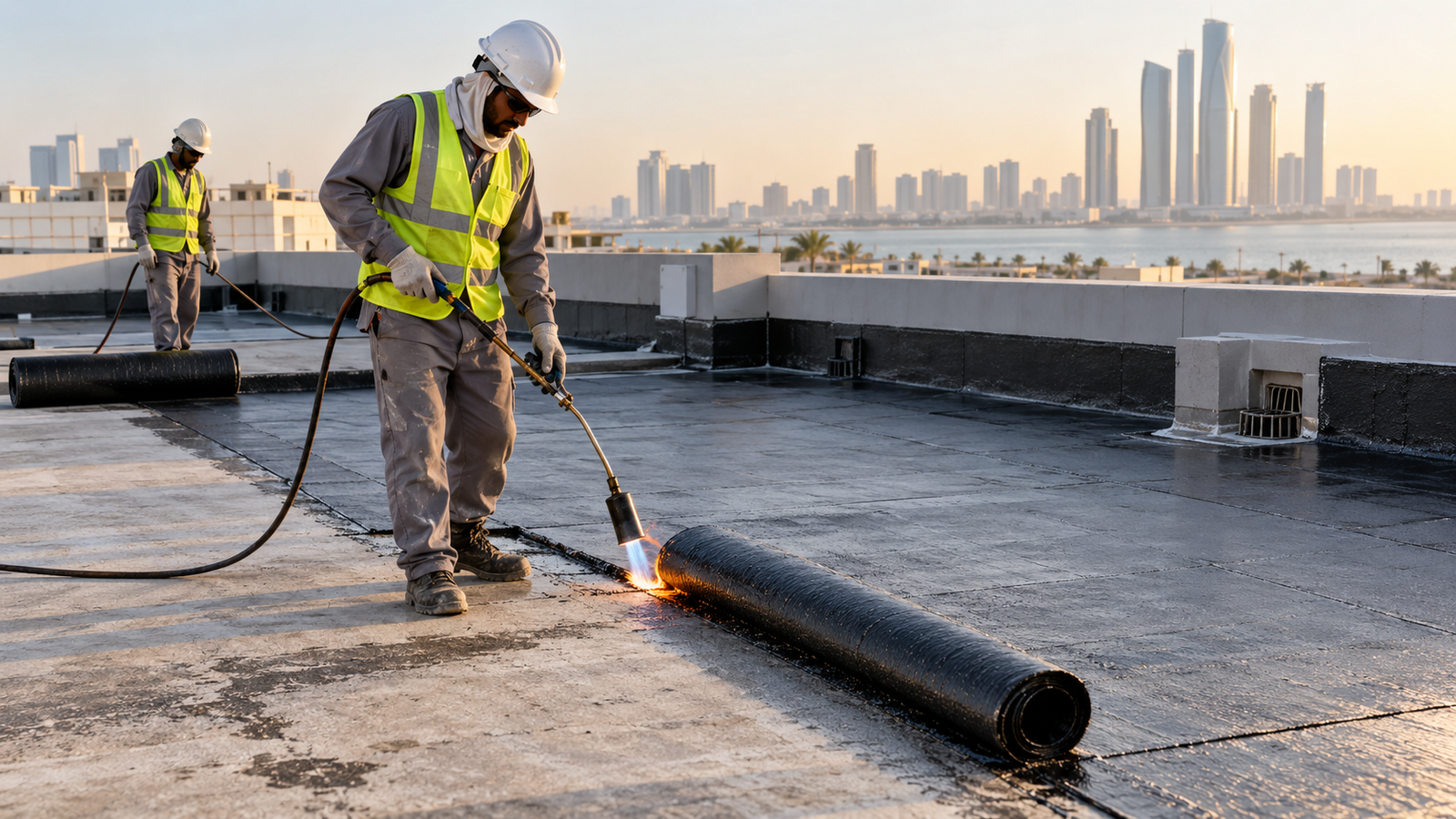
Bituminous membrane waterproofing – image from Buildcare media library01SHEET MEMBRANE

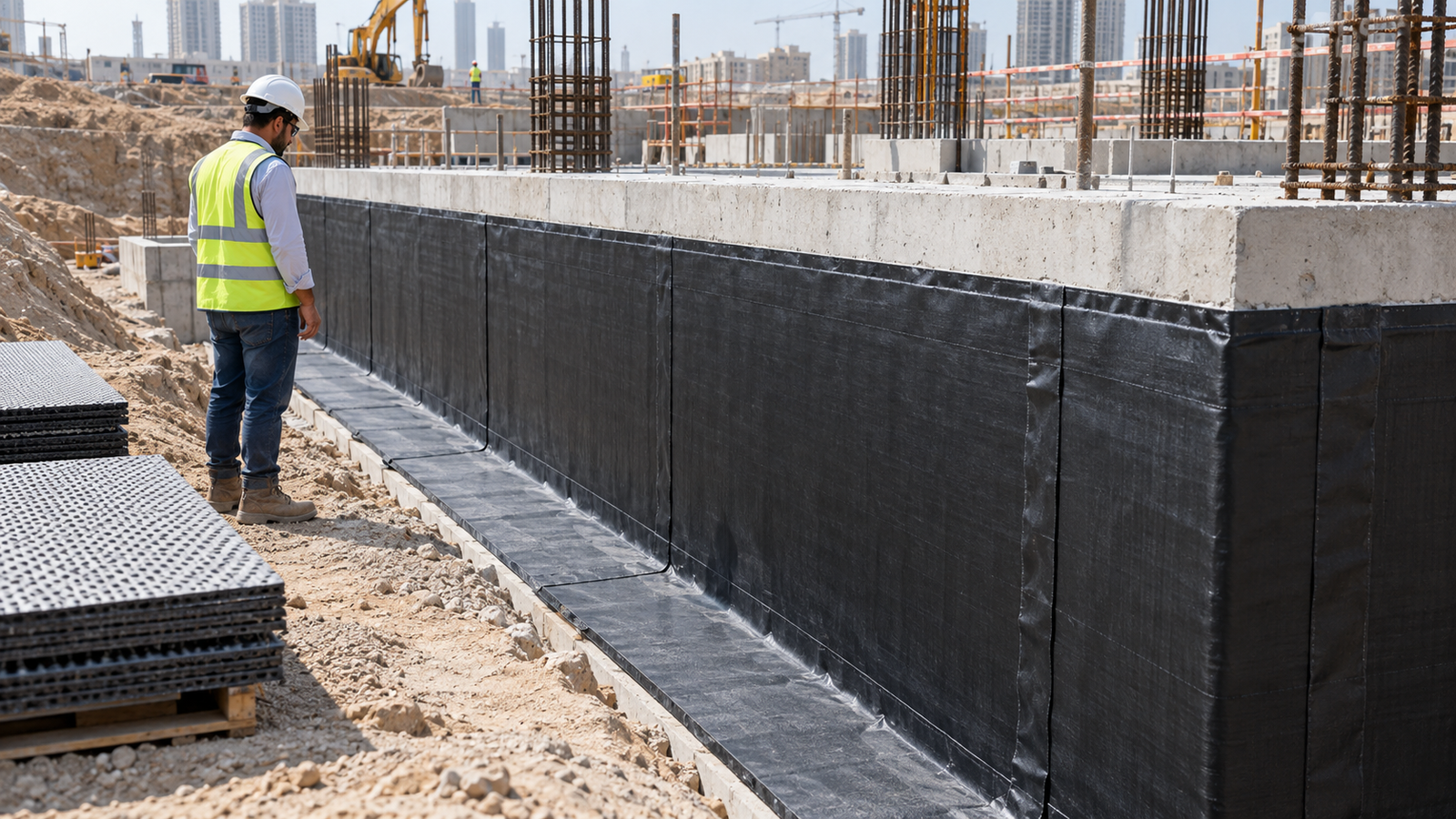
Bituminous membrane waterproofing

Roofs · Basements · Foundations

Preformed modified-bitumen sheets create a continuous barrier when seams and detailing are correctly joined. Common installation types include torch-applied membranes and self-adhesive membranes; their installation and fire-safety requirements differ.

COMMON APPLICATIONS

Flat roofs under protection, basement retaining walls, foundations, podium slabs and other specification-approved below-grade areas.

DESIGN & INSTALLATION CHECKS

Check SBS/APP modification, membrane thickness, reinforcement, primer, lap details, termination bars, protection boards and compatibility with the substrate. Torch application needs a controlled fire-safety procedure.
Cementitious waterproofing coatings – image from Buildcare media library02CEMENT-BASED

Cementitious waterproofing coatings

Bathrooms · Wet rooms · Concrete

Cement-based coatings are applied to prepared mineral substrates. Polymer-modified flexible grades can accommodate limited substrate movement, whereas rigid grades suit stable concrete and masonry where the specification allows.

COMMON APPLICATIONS

Bathrooms, wet rooms, water-retaining structures, balconies beneath finishes and concrete surfaces—provided the selected product is rated for the exposure and water pressure.

DESIGN & INSTALLATION CHECKS

Pay close attention to corners, joints, penetrations, movement cracks, curing and compatibility with subsequent tiling or plastering. Not all cementitious products are suitable for potable water or negative-side pressure.

Acrylic elastomeric waterproofing – image from Buildcare media library03LIQUID-APPLIED

Acrylic elastomeric waterproofing

Roof refurbishment · Exposed surfaces

Acrylic liquid-applied coatings form a seamless protective layer after curing. Selected systems can be used as reflective roof coatings, with detailing reinforcement required at joints, changes of plane and penetrations.

COMMON APPLICATIONS

Roof maintenance and refurbishment, parapets and selected exposed concrete or roof surfaces where the product has appropriate UV and ponding-water performance.

DESIGN & INSTALLATION CHECKS

Confirm standing-water resistance, minimum dry-film thickness, compatible primer, reinforcement and required recoat intervals. Acrylic does not automatically mean permanent ponding-water resistance.

Polyurethane liquid membrane waterproofing – image from Buildcare media library04ELASTOMERIC COATING

Polyurethane liquid membrane waterproofing

Complex roofs · Balconies · Terraces

Liquid polyurethane waterproofing forms a seamless flexible membrane. Depending on chemistry, it may be one- or two-component, moisture-curing or reactive, and may require a UV-stable topcoat where exposed.

COMMON APPLICATIONS

Roofs with complicated details, terraces, balconies, planters and other areas specified for liquid-applied elastomeric membranes.

DESIGN & INSTALLATION CHECKS

Check substrate moisture, adhesion, primer, consumption, recoat windows, UV exposure, traffic rating and protective screeds. Some systems require specialist installers and precise weather controls.

Polyurea and hybrid polyurea systems – image from Buildcare media library05SPRAY-APPLIED

Polyurea and hybrid polyurea systems

Podiums · Planters · High-performance structures

Polyurea and hybrid polyurea systems are fast-reacting protective membranes often installed using specialist plural-component spray equipment. Different formulations offer different mechanical, elongation and chemical resistance properties.

COMMON APPLICATIONS

High-demand podiums, planter boxes, below-grade structures, tank or industrial works where the exact tested system is specified.

DESIGN & INSTALLATION CHECKS

Specialist preparation, spray equipment, environmental conditions, thickness testing, adhesion tests and correct detailing are crucial. Hybrid polyurea should not be assumed identical to pure polyurea.

Crystalline waterproofing treatments – image from Buildcare media library06CONCRETE TECHNOLOGY

Crystalline waterproofing treatments

Basements · Concrete tanks · Foundations

Crystalline treatments are designed to reduce water penetration through concrete by reacting with moisture and cementitious constituents. Some are applied as surface treatments; others are included in the concrete mix.

COMMON APPLICATIONS

Suitable concrete structures, water-retaining works and below-grade elements when a crystalline system is specified and compatible with the concrete design.

DESIGN & INSTALLATION CHECKS

They do not replace waterbars, movement-joint seals or appropriate detailing. Crack movement, hydrostatic pressure and substrate condition must be assessed by the designer.

PVC, TPO, FPO and HDPE membranes – image from Buildcare media library07PREFORMED SHEETS

PVC, TPO, FPO and HDPE membranes

Large roofs · Below-ground structures

Synthetic sheet waterproofing systems provide factory-controlled sheet thickness. Depending on the technology, they may be mechanically fixed, adhered, ballasted, loose-laid or fully bonded to concrete.

COMMON APPLICATIONS

Commercial roofs, basements, tunnels and large-area waterproofing where welded joints, tested sheet systems or fully bonded below-ground protection are required.

DESIGN & INSTALLATION CHECKS

Specify the exact polymer, sheet thickness, seam welding, termination, substrate isolation, wind uplift and protection. PVC, TPO/FPO and HDPE membranes are not interchangeable.

Liquid bituminous coatings and emulsions – image from Buildcare media library08LIQUID-APPLIED

Liquid bituminous coatings and emulsions

Foundations · Damp-proofing · Detailing

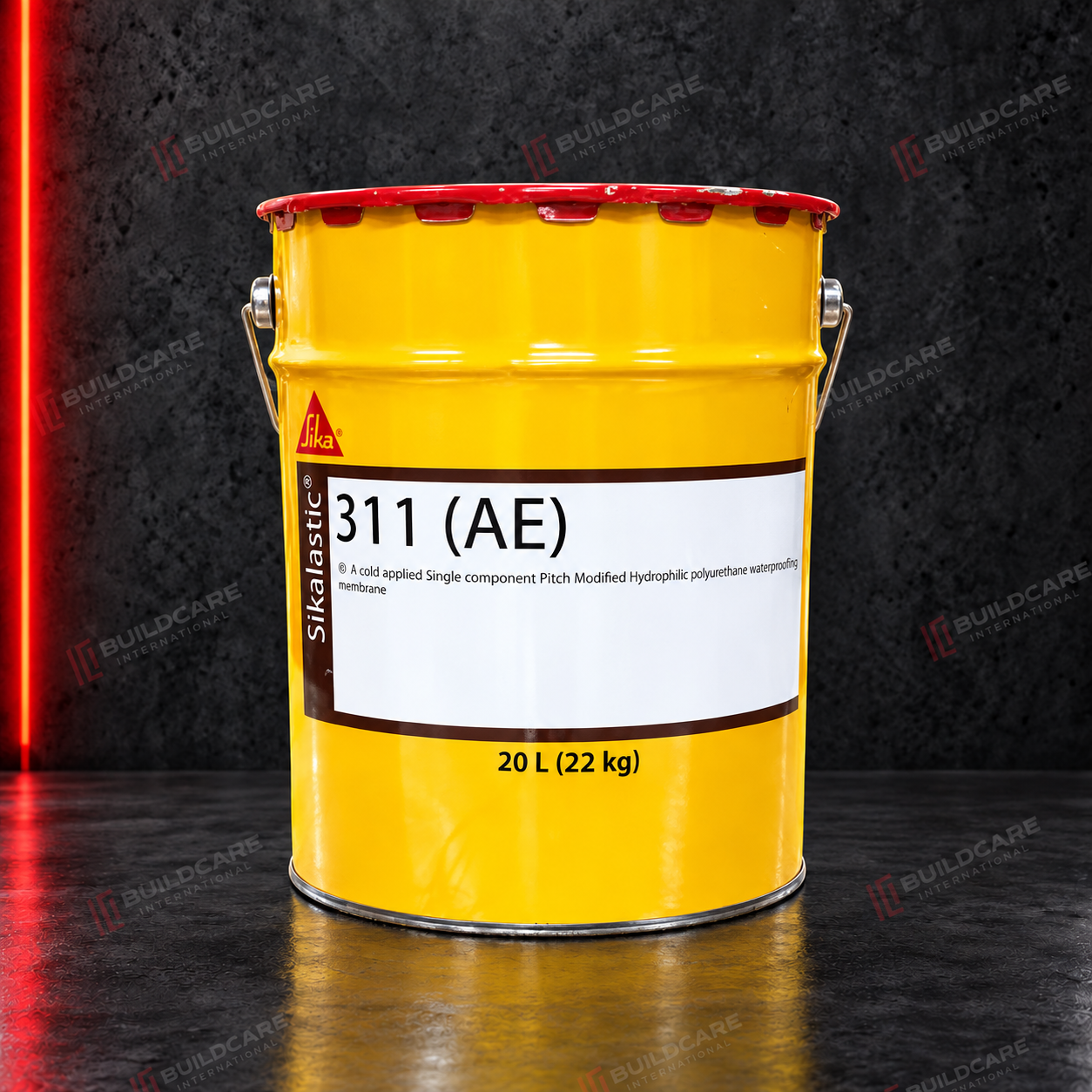
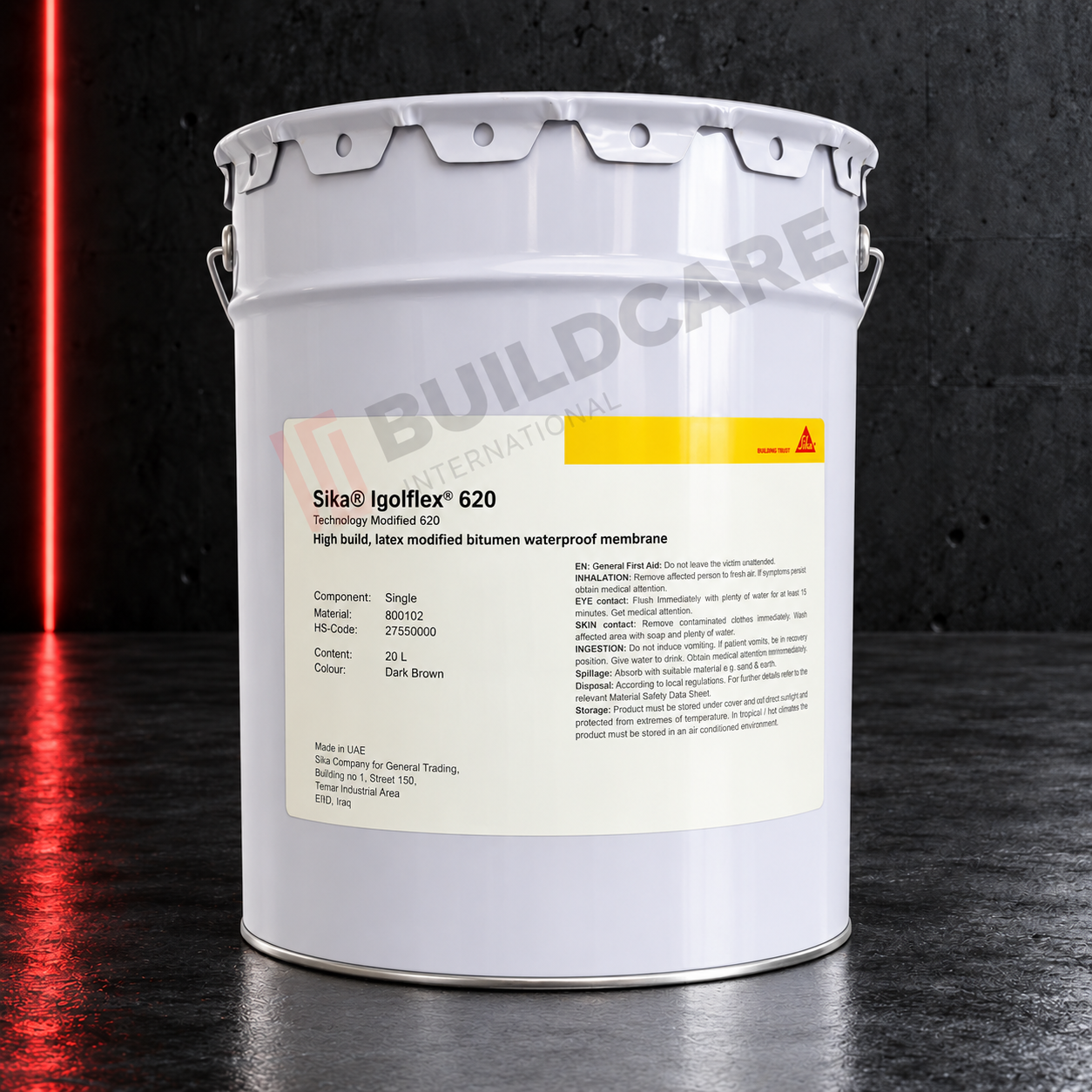
Brush-, roller- or spray-applied bituminous products create a moisture-resistant layer. They include emulsions and modified coatings; performance varies widely from basic damp-proofing to designed liquid-applied membranes.

COMMON APPLICATIONS

Foundation walls, below-grade damp protection, wet areas or membrane detailing only when the product and complete system are approved for the exposure.

DESIGN & INSTALLATION CHECKS

Separate damp-proofing from waterproofing against hydrostatic pressure. Verify solvent/water base, primer, dry thickness, curing, protection and compatibility with insulation or sheet membranes.

Integral waterproofing admixtures – image from Buildcare media library09INTEGRAL CONCRETE

Integral waterproofing admixtures

Concrete slabs · Tanks · Below-ground concrete

Admixtures incorporated into concrete can improve resistance to water penetration when used as part of properly designed, placed, consolidated and cured concrete.

COMMON APPLICATIONS

Water-retaining or below-ground reinforced concrete where the engineer specifies a watertight-concrete approach.

DESIGN & INSTALLATION CHECKS

An admixture alone will not make a poorly detailed joint or cracked structure watertight. Joint waterstops, crack-width control, curing and construction practice remain essential.

Waterbars, hydrophilic strips and injection sealing – image from Buildcare media library10DETAILING SYSTEM

Waterbars, hydrophilic strips and injection sealing

Construction joints · Movement joints · Penetrations

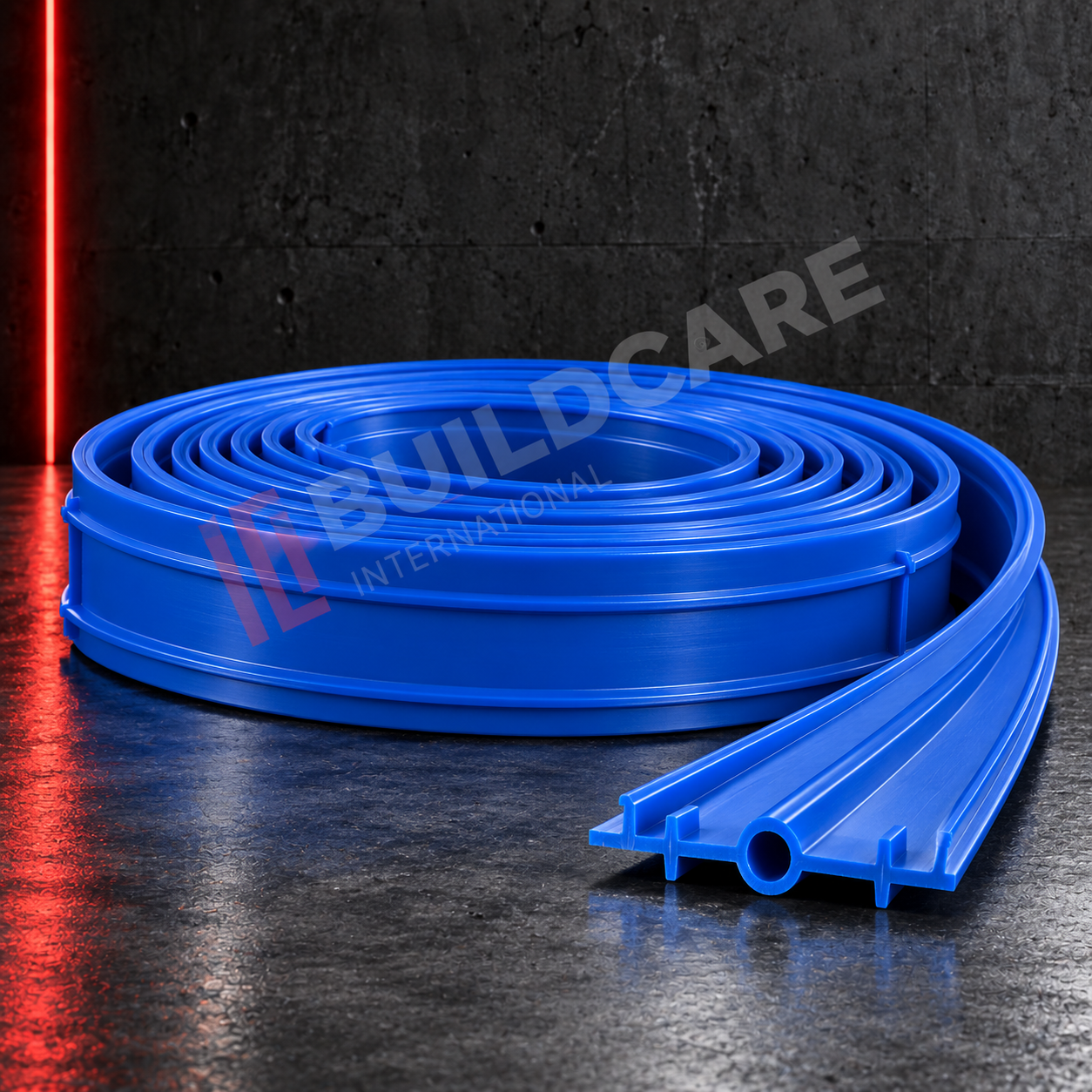
Joint waterproofing uses embedded PVC or rubber waterbars, swellable profiles, injection hoses, joint tapes, sealants and injection resins to limit leakage paths through discontinuities.

COMMON APPLICATIONS

Basement construction joints, water tanks, retaining walls, expansion joints, penetrations and repair of leaking cracks, depending on the selected detail.

DESIGN & INSTALLATION CHECKS

Joint movement, hydrostatic pressure, waterstop positioning, concrete cover, chemical exposure and compatible injection material must be considered. Epoxy crack repair and flexible PU water-stopping serve different purposes.

START WITH THE APPLICATION

Which waterproofing system
belongs where?

Application is often more important than the product name. The final system must follow the project specification and manufacturer’s instructions.

ROOFS waterproofing application01 / APPLICATION

ROOFS

Exposed UV, heat and rain

Choose UV-rated systems and design for standing water, drainage and details.

BASEMENTS waterproofing application02 / APPLICATION

BASEMENTS

Hydrostatic pressure & ground moisture

Consider external membranes, integral concrete and engineered joint protection.

BATHROOMS waterproofing application03 / APPLICATION

BATHROOMS

Water behind tile finishes

Prioritize compatible coatings, corners, drains and pipe penetrations.

PODIUMS & PLANTERS waterproofing application04 / APPLICATION

PODIUMS & PLANTERS

Root zones and buried membranes

Select a protected system with drainage and any specified root resistance.

AT-A-GLANCE COMPARISON

Compare waterproofing
systems in the UAE

Use this as an initial comparison only, not as a substitute for project design, specifications or product TDS.

SystemTypical locationsInstallation formatKey checks
Bituminous sheetRoofs, foundations, podiumsPreformed, seamedPrimer, laps, protection
CementitiousWet rooms, concreteBrush/trowel appliedCorners, curing, movement
Acrylic coatingSelected exposed roofsLiquid seamlessUV, ponding rating, DFT
Polyurethane LAMRoofs and detailed areasLiquid elastomericMoisture, primer, UV topcoat
Polyurea / hybridSpecialist infrastructureRapid spray membraneSpecialist QA and equipment
Synthetic sheetsLarge roofs, basementsWelded sheet systemSeams, fixings, wind uplift
Bituminous liquidDamp-proofing, buried surfacesCold-applied liquidPressure rating, protection
Crystalline / integralConcrete structuresConcrete-based treatmentJoint detailing, crack control
Waterbars / injectionJoints and leakage pathsJoint-specificMovement, positioning, resin
MATERIALS FROM OUR WEBSITE

Explore Buildcare’s
waterproofing product range

These are examples represented in Buildcare’s website media library. Current stock, authorized applications and technical specifications must be confirmed before ordering.

FIXX AC 5000 product image
Roof coatings

FIXX AC 5000

Acrylic roof waterproofing coating. Confirm system build-up, substrate and ponding requirements.

Explore materials ↗
Sikalastic range product image
Liquid waterproofing

Sikalastic range

Liquid-applied waterproofing options; match grade and topcoat to exposure.

Explore materials ↗
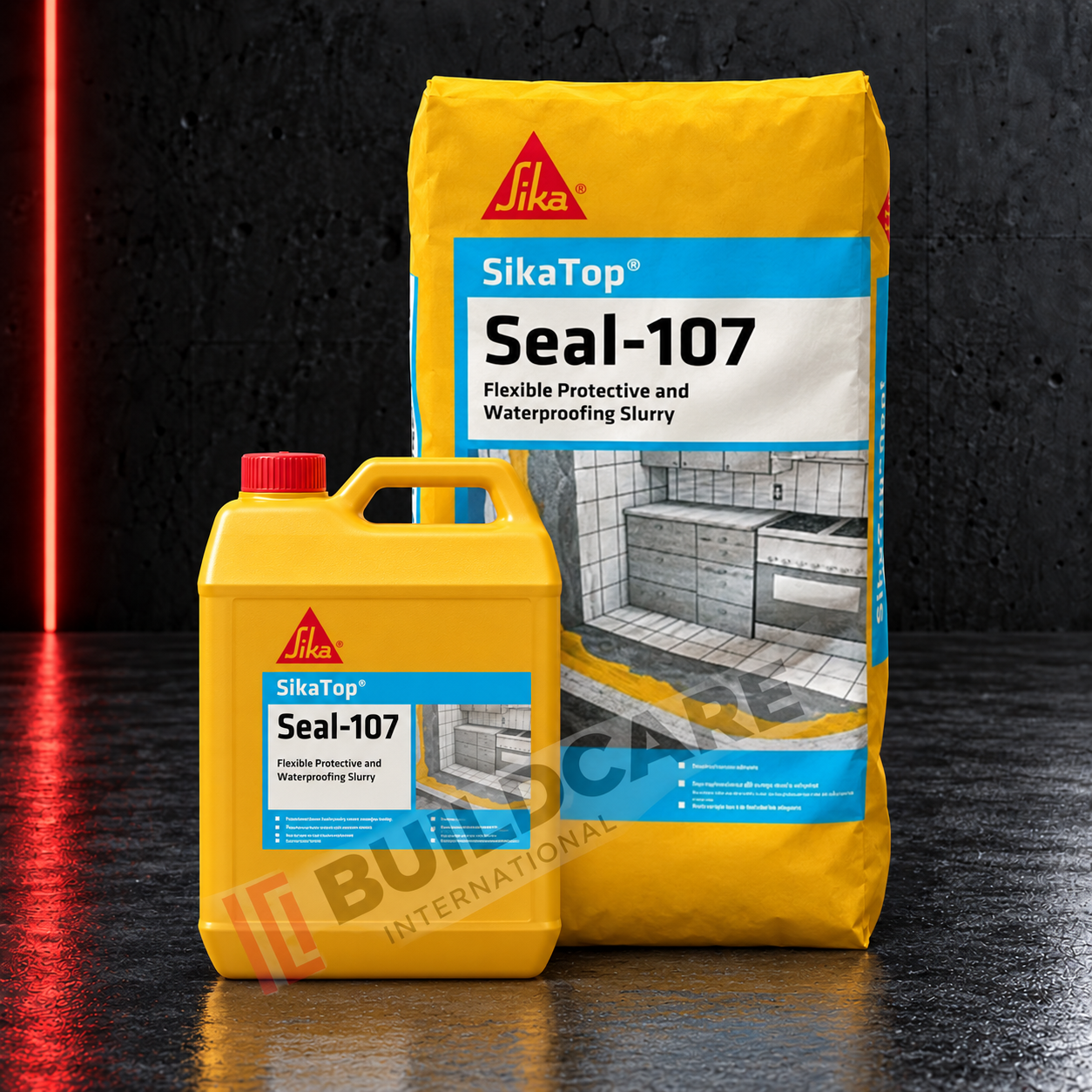
SikaTop Seal-107 product image
Cementitious coatings

SikaTop Seal-107

Cementitious waterproofing system for specification-approved concrete and wet areas.

Explore materials ↗
SikaShield membranes product image
Bituminous membranes

SikaShield membranes

Sheet membrane products for selected roof and below-grade applications.

Explore materials ↗
Sika Waterbar product image
Joint detailing

Sika Waterbar

Embedded joint waterstop systems for watertight construction detailing.

Explore materials ↗
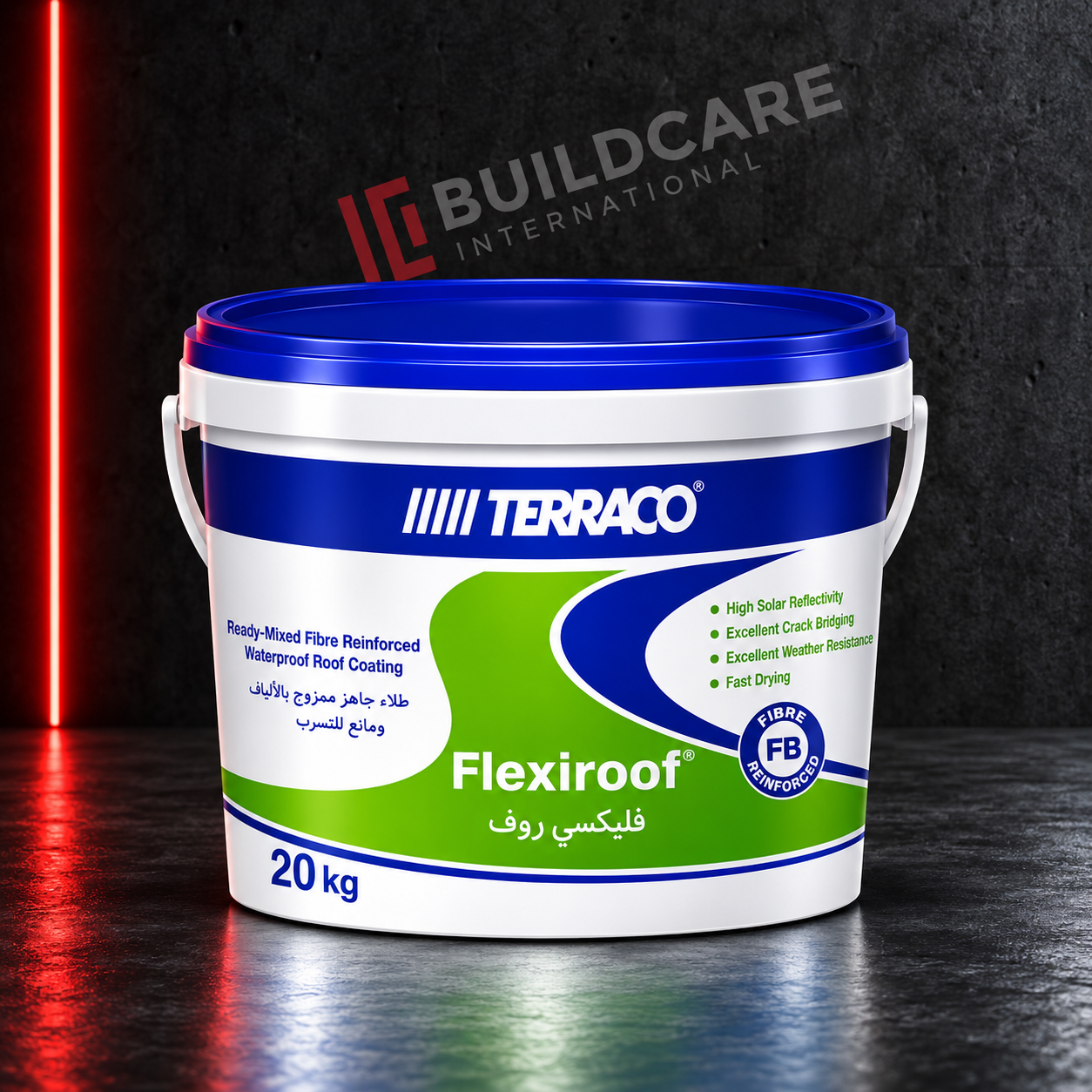
Terraco Flexiroof product image
Roof refurbishment

Terraco Flexiroof

Roof coating from the Buildcare media library; verify current technical suitability.

Explore materials ↗
For complete system selection, request the latest manufacturer product data sheets, specifications and compatibility details. Availability and performance vary by product grade.
HOW PROFESSIONALS SPECIFY SYSTEMS

Five essential checks before
waterproofing installation

01

Assess conditions

Identify substrate, water pressure, crack movement, temperature, access and exposure.

02

Select a tested system

Check compatibility, intended application, TDS, method statement and details.

03

Prepare the substrate

Repair defects; confirm dryness, soundness, surface profile and primer requirements.

04

Detail critical points

Address joints, corners, drains, laps, pipe penetrations and terminations first.

05

Inspect & protect

Verify film thickness or seams, perform specified testing and protect the system.

QUESTIONS FROM UAE PROJECT TEAMS

Frequently asked
questions

Which waterproofing is best for flat roofs in the UAE? +

There is no universal best option. Depending on roof exposure, drainage, movement, access and project specification, solutions may include bituminous membranes, UV-rated acrylic or polyurethane liquids, or synthetic sheet systems. The product’s standing-water and UV ratings are particularly important.

Is cementitious waterproofing suitable for bathrooms? +

Many bathroom and wet-room systems use cementitious coatings beneath tile finishes, but the selected coating must be specified for the application and properly detailed at corners, drains and penetrations.

What is the difference between damp-proofing and waterproofing? +

Damp-proofing generally targets moisture migration under limited pressure; waterproofing is designed to resist water ingress, potentially including hydrostatic pressure. Always check the product’s declared service conditions.

Can acrylic waterproofing be left exposed in UAE sunlight? +

Some acrylic roof coatings are formulated for exterior UV exposure, but suitability depends on the exact product, surface preparation, ponding-water resistance and required thickness.

Do basements need waterproofing membranes or waterproof concrete? +

Projects may require external membranes, watertight concrete, joint waterstops or a combination. Selection depends on groundwater, structural design and leakage-tolerance requirements.

Where can I enquire about waterproofing materials in Abu Dhabi? +

Buildcare International provides product enquiries and technical sourcing support from Abu Dhabi. Share your project location, application area, drawings or specifications to request suitable material options and a quotation.

LET’S PROTECT YOUR NEXT PROJECT

Need the right waterproofing materials for your UAE project?

Send the application type, drawings, quantity, specification and location. Buildcare International can help with product information and quotation enquiries for projects in Abu Dhabi, Dubai and across the UAE.

Request a Quotation ↗Explore Waterproofing Materials →Buildcare International · Abu Dhabi, UAE · +971 2 448 1915
TECHNICAL REFERENCE NOTE

This educational guide describes common waterproofing system families. For exact application limitations and installation requirements, refer to current manufacturer product data sheets and project specifications. Reference resources: Sika GCC Waterproofing, Sika Liquid-Applied Membranes, and Sika Bituminous Membranes.